In the Like a Dragon series, irezumi tattoos are more than just body art—they serve as powerful symbols of each character's beliefs, values, and way of life.
From Kazuma Kiryu's Dragon to Goro Majima's Hannya, every tattoo carries its own traditional Japanese symbolism and reflects the character's role, personality, and journey throughout the story.
This guide provides an overview of the major irezumi tattoos featured in the Like a Dragon series, explaining their design elements, symbolic meanings, cultural inspirations, and connections to the characters who wear them.
Kazuma Kiryu's Irezumi: Dragon
Kazuma Kiryu
Tattoo Design Features
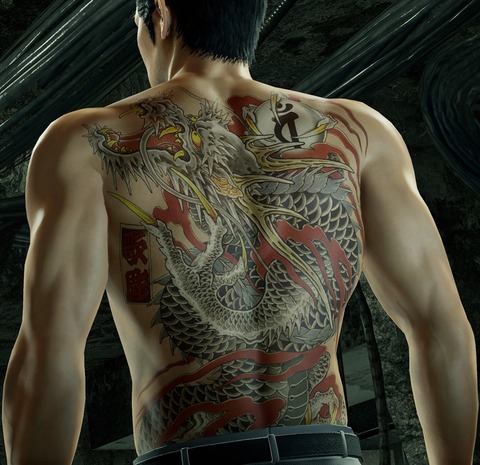
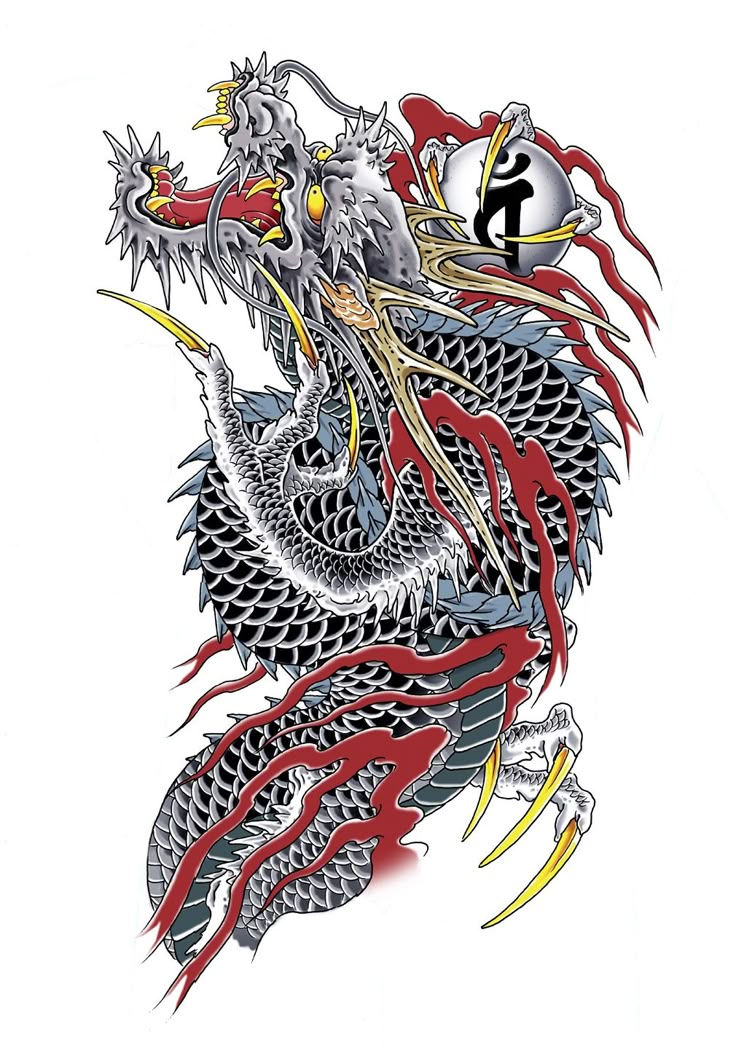
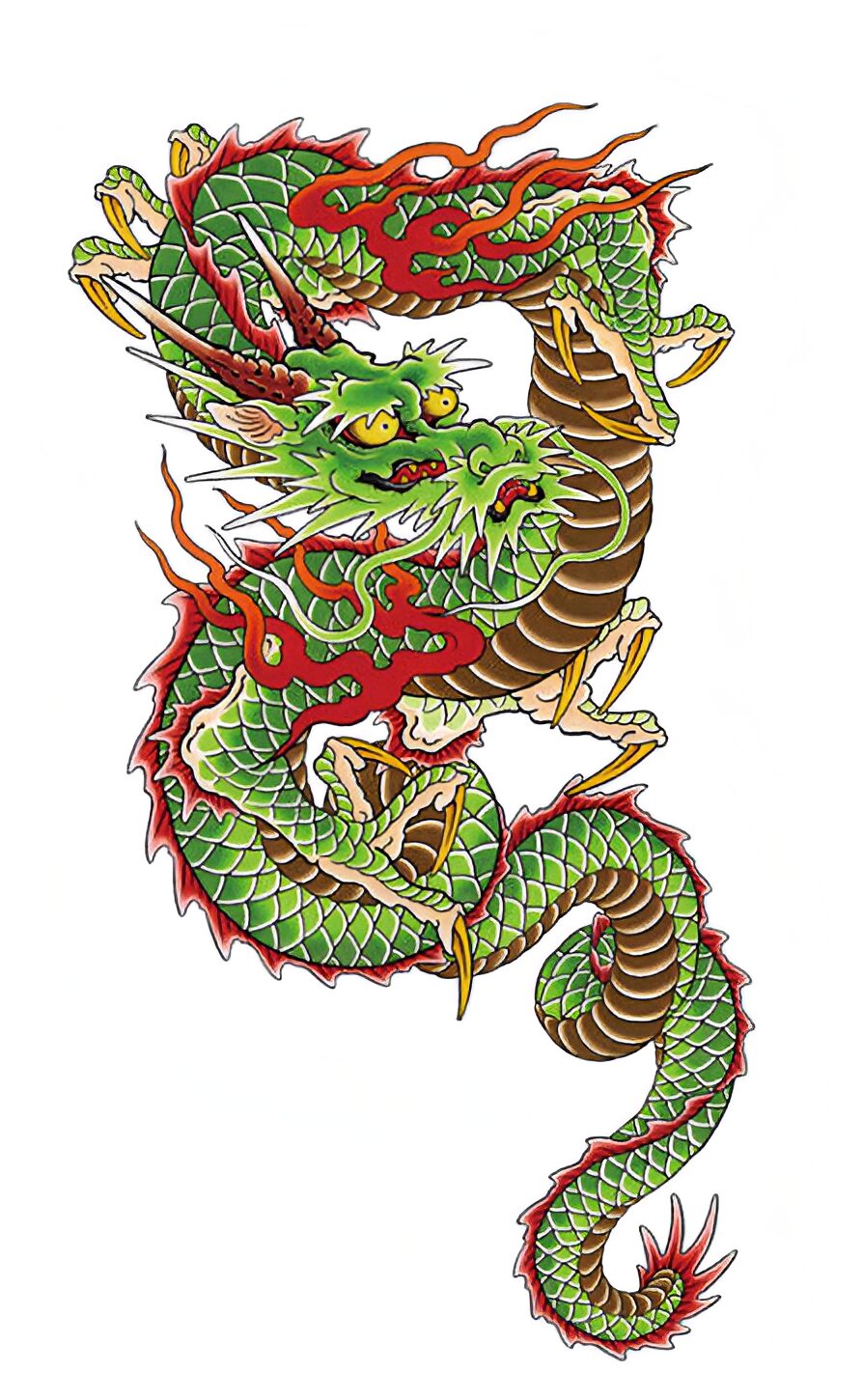
- The legendary Dragon (Ōryū) from Chinese mythology
- A traditional Eastern dragon holding a sacred pearl
- A large-scale full-back irezumi tattoo
- Tattoo artist: Utabori
Symbolism and Meaning of the Dragon
It is known as a divine creature associated with rain and weather, frequently depicted as a guardian spirit that aids heroes and brings an end to conflict and chaos.
In some legends, the Dragon is said to have assisted the Yellow Emperor, making it a symbol of a sacred and extraordinary dragon with divine status.
Meaning Within the Like a Dragon Series
Because the Dragon is portrayed as a divine being that stands above ordinary dragons, it reflects Kiryu's overwhelming strength, solitary nature, and role as a protector.
Kiryu is not simply a violent yakuza; he is a man driven by a strong sense of justice and a desire to protect the weak and those close to him, making the Dragon an especially fitting symbol for his character.
Major Appearances
Ichiban Kasuga's Irezumi: Dragonfish
Ichiban Kasuga
Tattoo Design Features
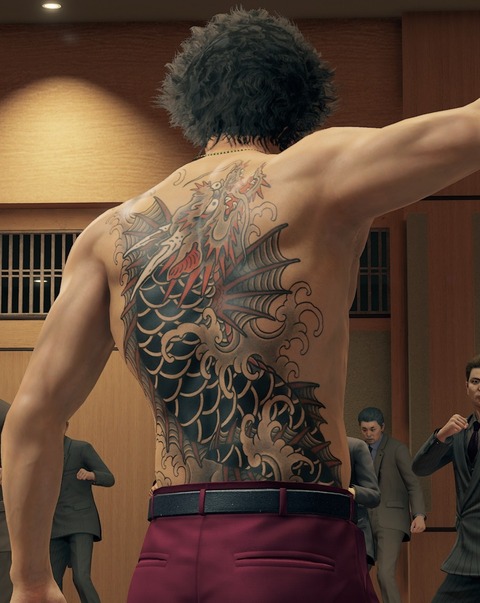
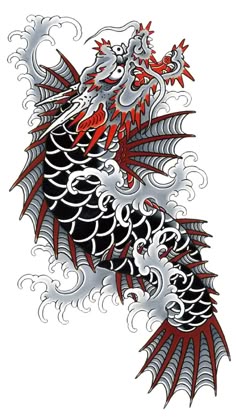
- A traditional irezumi depicting a Dragonfish, a fusion of a dragon and a fish
- A design featuring a dragon's head and a fish's body
- Depicted ascending through flowing water
- A large-scale full-back irezumi tattoo
- Tattoo artist: Unknown
Symbolism and Meaning of the Dragonfish
This symbolism is closely connected to the Chinese legend of the Dragon Gate, in which a fish that successfully swims upstream through powerful currents is transformed into a dragon.
As a result, the Dragonfish represents growth, untapped potential, perseverance, and the journey toward greatness.
Combining the power of a dragon with the vitality and adaptability of a fish, it is also associated with success, advancement, and personal development.
Meaning Within the Like a Dragon Series
Because of this, the Dragonfish serves as a fitting symbol for a protagonist who has not yet reached his full potential but is constantly growing and moving toward becoming a dragon himself.
Ichiban values friendship, loyalty, and human connection above all else, and his determination to keep moving forward despite hardship mirrors the image of the Dragonfish swimming upstream toward its destiny.
In Yakuza: Like a Dragon, the tattoo symbolizes Ichiban's role as the hero of a new generation and the beginning of his journey toward becoming a legendary figure.
Major Appearances
Goro Majima's Irezumi: Hannya, Camellia, and White Snake
Goro Majima
Tattoo Design Features
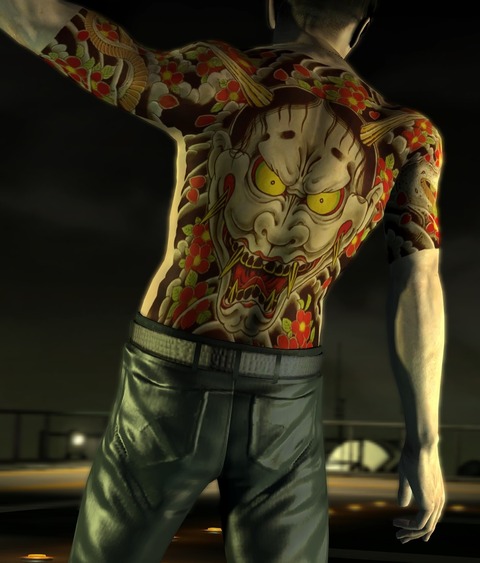
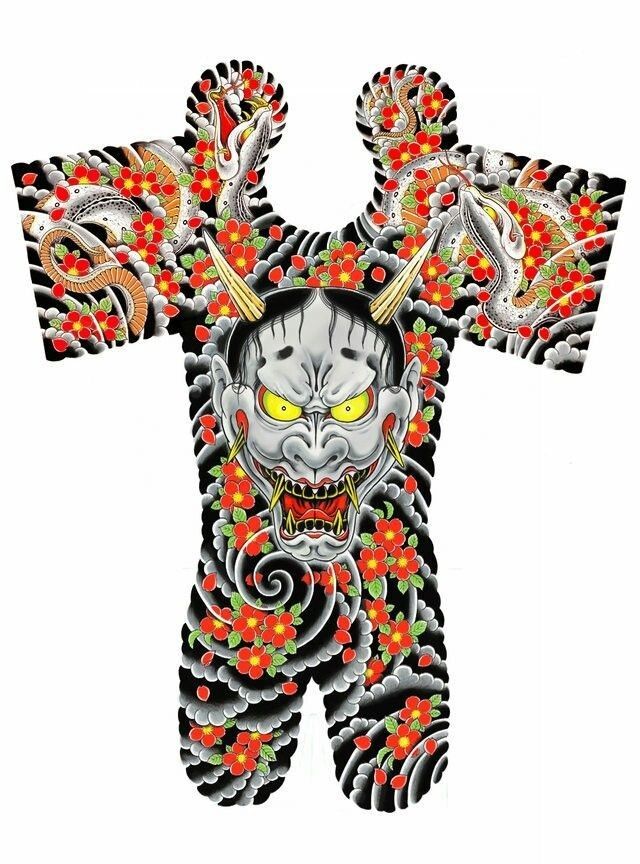
- A traditional irezumi combining a Hannya mask, a white snake, and camellia flowers
- A large-scale full-back irezumi tattoo
- Tattoo artist: Unknown
Symbolism and Meaning of the Hannya, Camellia, and White Snake
In Japanese tattoo art, the Hannya is also commonly used as a symbol of protection against evil spirits and powerful emotions.
The white snake has long been regarded as a sacred messenger of the gods and is associated with wealth, rebirth, wisdom, and deep attachment.
Camellia flowers symbolize beauty, elegance, and nobility. However, because the entire flower falls from the stem at once, they are also sometimes associated with impermanence, mortality, and tragedy.
Meaning Within the Like a Dragon Series
However, Majima is far more complex than a simple madman. Beneath his wild exterior lies a man defined by loyalty, deep emotions, and unwavering convictions, making the Hannya and white snake particularly fitting symbols of obsession, passion, and attachment.
The camellia flowers are often interpreted as representing the more delicate and vulnerable side of Majima's personality, highlighting the tragedy and emotional depth hidden beneath his eccentric behavior.
Together, these elements create one of the most distinctive and symbolically rich tattoos in the Like a Dragon series.
Major Appearances
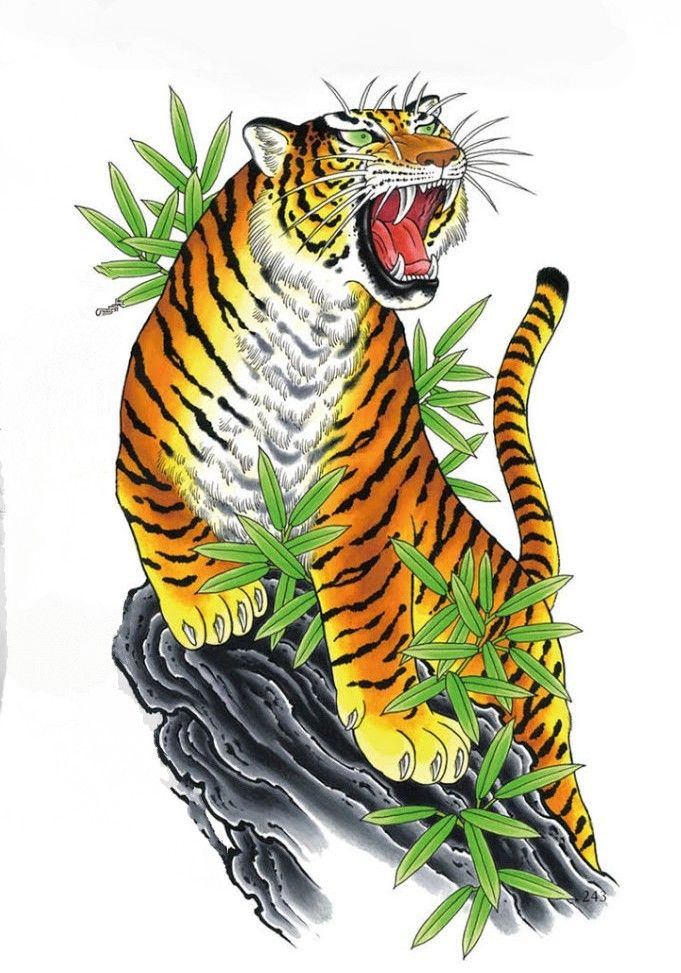
Taiga Saejima's Irezumi: Tiger and Bamboo
Taiga Saejima
Tattoo Design Features
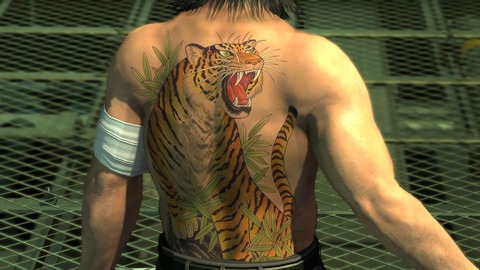
- A traditional irezumi depicting a massive tiger surrounded by bamboo
- A large-scale full-back irezumi tattoo
- Tattoo artist: Unknown
Symbolism and Meaning of the Tiger and Bamboo
In East Asian culture, it is often feared and respected as the king of beasts, and is frequently associated with warding off evil spirits and misfortune.
Bamboo, which is commonly depicted alongside tigers in traditional Japanese and Chinese art, symbolizes vitality, resilience, and perseverance.
Because bamboo remains upright through harsh weather and changing seasons, it is often associated with endurance, mental fortitude, and an unbreakable spirit.
Meaning Within the Like a Dragon Series
At the same time, Saejima is deeply loyal and honorable, enduring years of imprisonment and countless hardships without abandoning his principles. This aspect of his personality closely aligns with the symbolism of bamboo and its association with perseverance and resilience.
The tiger is also considered one of the most powerful creatures in East Asian mythology and folklore, often standing alongside the dragon as its equal. In this sense, Saejima's tiger serves as a counterpart to Kazuma Kiryu's dragon, emphasizing his status as one of the strongest figures in the Like a Dragon series.
Major Appearances
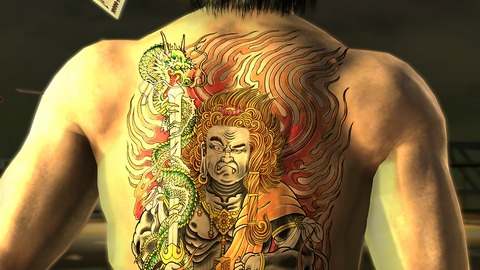
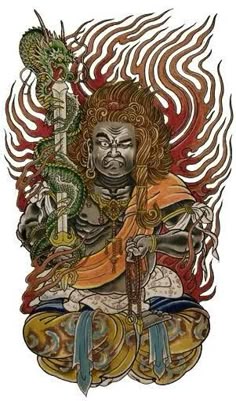
Daigo Dojima's Irezumi: Fudō Myōō
Daigo Dojima
Tattoo Design Features
- A traditional irezumi depicting Fudō Myōō, a revered Buddhist protector deity
- Features the blazing Karura Flames in the background
- A large-scale full-back irezumi tattoo
- Tattoo artist: Unknown
Symbolism and Meaning of Fudō Myōō
Despite his fierce and wrathful appearance, his purpose is to guide and save people by destroying evil, temptation, and ignorance.
The sword he carries symbolizes the power to cut through delusion and corruption, while the rope represents his role in guiding and rescuing those who have lost their way.
True to his name, which means "Immovable Wisdom King," Fudō Myōō is also a symbol of steadfast determination, spiritual strength, and the resolve to remain unshaken in the face of adversity.
Meaning Within the Like a Dragon Series
Forced into a position of leadership at a young age, Daigo endured betrayals, internal conflicts, and countless crises while continuing to stand at the forefront of the Tojo Clan's struggles.
The wrathful expression of Fudō Myōō does not represent mindless violence, but rather anger directed toward protecting others. This symbolism closely reflects Daigo's role as a leader who repeatedly sacrificed himself for the sake of his organization and its members.
Major Appearances
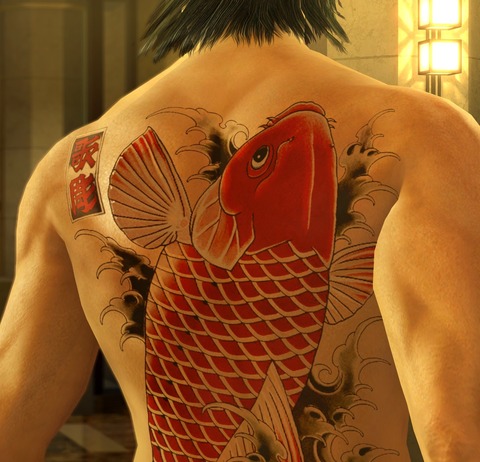
Akira Nishikiyama's Irezumi: Crimson Koi
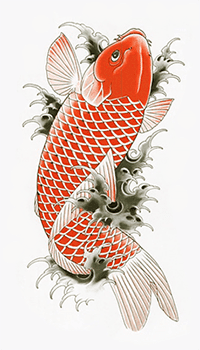
Akira Nishikiyama
Tattoo Design Features
- A crimson koi (Higoi)
- A koi swimming upward against the current
- A large-scale full-back irezumi tattoo
- Depicted navigating through rough waves
- Tattoo artist: Utabori
Symbolism and Meaning of the Crimson Koi
Its symbolism is closely tied to the Chinese legend of the Dragon Gate, in which a koi that successfully swims upstream through powerful rapids transforms into a dragon.
Because of this story, koi are often associated with determination, achievement, personal growth, and the pursuit of success.
The crimson-colored koi, known as a Higoi, additionally symbolizes passion, intense emotions, ambition, and unwavering resolve.
Meaning Within the Like a Dragon Series
While Kiryu is portrayed as someone who already embodies the qualities of a dragon, Nishikiyama represents a man striving to become one. His koi ascending toward the Dragon Gate reflects his desire to rise above his circumstances and achieve greatness.
The tattoo also embodies Nishikiyama's admiration for Kiryu, his feelings of inferiority, his relentless ambition, and the emotional turmoil that defines much of his character arc.
As a result, the Crimson Koi is one of the most meaningful symbolic tattoos in the series, representing both aspiration and tragedy.
Major Appearances
Futoshi Shimano's Irezumi: Tiger and Cherry Blossoms
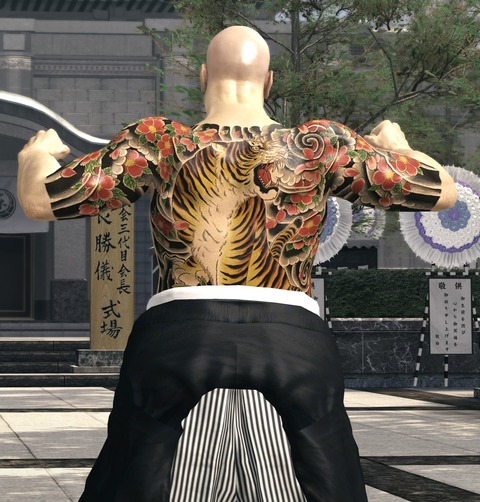
Futoshi Shimano
Tattoo Design Features
- A traditional irezumi depicting a massive tiger and cherry blossoms
- A large-scale full-back irezumi tattoo
- Tattoo artist: Unknown
Symbolism and Meaning of the Tiger and Cherry Blossoms
Throughout East Asia, it is often referred to as the king of beasts and is frequently used in tattoo art to represent overwhelming power and intimidation.
Cherry blossoms, on the other hand, are one of Japan's most iconic cultural symbols and are associated with beauty, impermanence, and the fleeting nature of life.
Falling cherry blossoms are particularly connected to the ideals of living intensely and accepting death with dignity, themes that have long been intertwined with yakuza and chivalric culture.
Meaning Within the Like a Dragon Series
His aggressive personality, ruthless methods, and commanding influence align closely with the tiger's symbolism as a powerful and feared ruler among beasts.
The cherry blossom motif is often interpreted as representing the yakuza ideal of honor and the beauty of a dignified end, adding a layer of traditional chivalric values beneath Shimano's brutal exterior.
As Goro Majima's patriarch and one of the dominant figures of the early series, Shimano's tattoo stands as one of the defining irezumi designs associated with the Tojo Clan's old guard.
Major Appearances
Ryuji Goda's Irezumi: Yellow Dragon
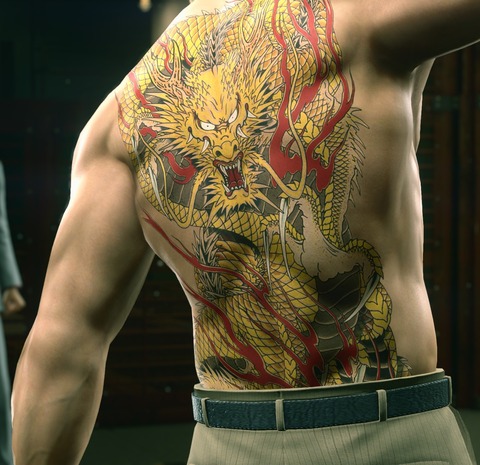
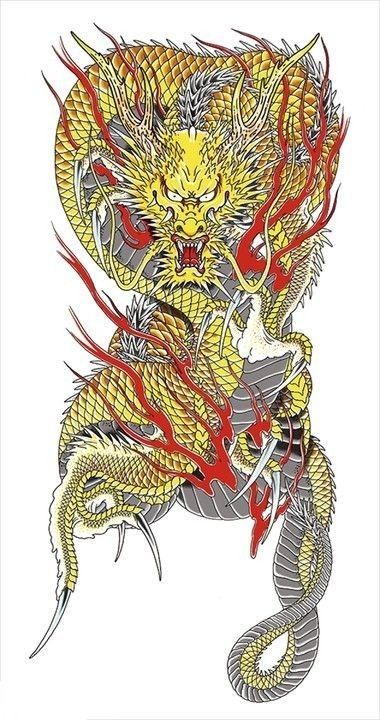
Ryuji Goda
Tattoo Design Features
- A golden dragon known as the Yellow Dragon (Kōryū)
- A large-scale full-back irezumi tattoo
- Tattoo artist: Unknown
Symbolism and Meaning of the Yellow Dragon
In the philosophy of the Five Elements, the color yellow symbolizes the center, imperial authority, and rulership. As a result, the Yellow Dragon is frequently associated with power, sovereignty, prosperity, and leadership.
In some traditions, it is considered a higher-order symbol even beyond the Four Symbols, leading it to be interpreted as the ultimate dragon or the dragon of kings.
Meaning Within the Like a Dragon Series
While Kiryu bears the Dragon tattoo, Goda carries the Yellow Dragon, creating a deliberate contrast between two men who each embody the image of a dragon.
Because the Yellow Dragon symbolizes authority, kingship, and supreme status, it perfectly reflects Goda's overwhelming confidence, ambition, and belief that he alone deserves to stand at the top.
The tattoo is also closely tied to one of Yakuza Kiwami 2's central themes: the idea that there can be only one true dragon.
Major Appearances
Rikiya Shimabukuro's Irezumi: Habu and Palm Leaves
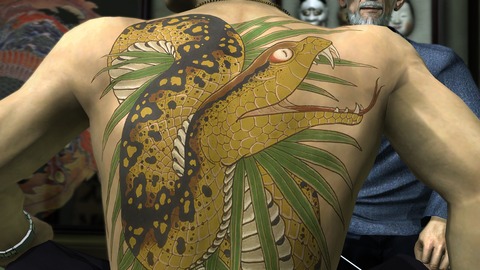
Rikiya Shimabukuro
Tattoo Design Features
- A traditional irezumi depicting a Habu, Okinawa's venomous pit viper
- A large-scale full-back irezumi tattoo
- Tattoo artist: Unknown; completed by Utabori
Symbolism and Meaning of the Habu and Palm Leaves
Snakes have long held symbolic significance across many cultures, representing rebirth, determination, wisdom, protection, and vitality. Because they shed their skin, they are especially connected to renewal and the cycle of life.
The palm leaves complement the design by emphasizing Okinawa's subtropical environment. They symbolize vitality, a connection to nature, and a strong sense of place, making them a fitting motif alongside the Habu.
Meaning Within the Like a Dragon Series
Rikiya possesses both a rough, aggressive side and a warm, approachable personality, qualities that align well with the Habu's dual image of danger and vitality.
The tropical design elements, including the palm leaves, further reinforce Okinawa's identity as a setting within the story. As a result, Rikiya's tattoo stands as one of the most distinctive regional irezumi designs featured in Yakuza 3.
Major Appearances
Shigeru Nakahara's Irezumi: Shisa and Hibiscus
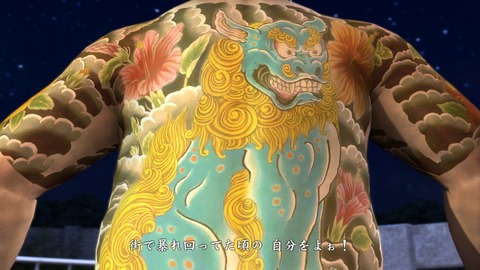
Shigeru Nakahara
Tattoo Design Features
- A traditional irezumi featuring a Shisa, Okinawa's guardian beast
- A large-scale full-back irezumi tattoo
- Tattoo artist: Unknown
Symbolism and Meaning of the Shisa and Hibiscus
Derived from the traditional lion-dog statues found throughout Okinawa, Shisa are believed to safeguard homes, communities, and sacred places from harm.
The hibiscus, meanwhile, is one of the most iconic tropical flowers and is commonly associated with passion, vitality, beauty, and vibrant energy.
Together, the Shisa and hibiscus create a distinctly Okinawan motif that strongly reflects the culture and identity of the region.
Meaning Within the Like a Dragon Series
Because of this role, the Shisa's symbolism as a guardian beast aligns perfectly with Nakahara's character and leadership style.
His larger-than-life personality, strong sense of loyalty, and deep affection for Okinawa are also reflected in the hibiscus motif, which embodies the warmth and spirit of the islands.
As a result, Nakahara's tattoo stands out as one of the most memorable Okinawan-themed irezumi designs featured in Yakuza 3.
Major Appearances
Tsuyoshi Kanda's Irezumi: Celestial Maiden
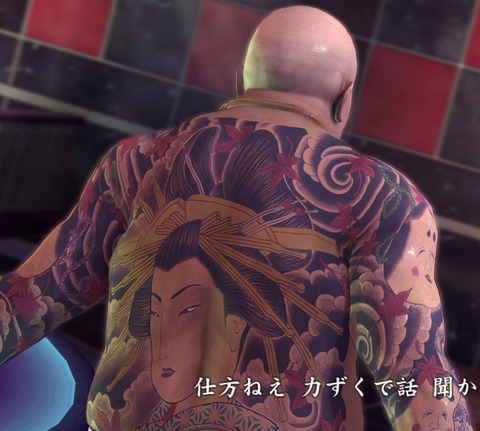
Tsuyoshi Kanda
Tattoo Design Features
- A traditional irezumi depicting a beautiful celestial maiden
- A large-scale full-back irezumi tattoo
- Tattoo artist: Unknown
Symbolism and Meaning of the Celestial Maiden
They are often depicted wearing flowing feathered robes and dancing gracefully through the skies, symbolizing beauty, purity, grace, healing, and nobility.
At the same time, celestial maidens are frequently portrayed as distant and unattainable figures, embodying themes of transience, fantasy, and seductive mystery.
Because of these qualities, the Tennyo has become a popular motif in traditional Japanese tattoo art, representing both elegance and illusion.
Meaning Within the Like a Dragon Series
This makes his choice of a celestial maiden tattoo particularly distinctive, as it contrasts sharply with the fierce animal motifs commonly seen throughout the series.
Kanda is also a character consumed by status, greed, and personal desire, and the image of an alluring yet unattainable heavenly beauty can be interpreted as reflecting those aspects of his personality.
As a result, the tattoo is often viewed as a symbolic representation of Kanda's vanity, aspirations, and the illusions he chases throughout his rise to power.
Major Appearances
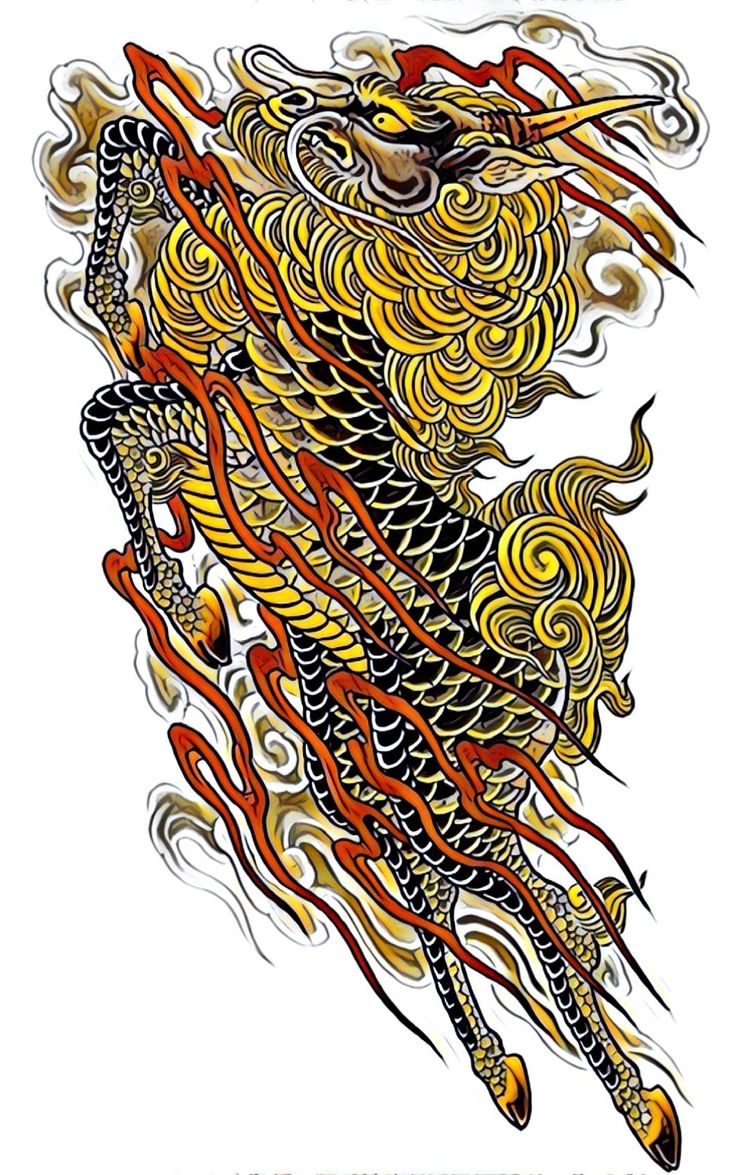
Yoshitaka Mine's Irezumi: Qilin
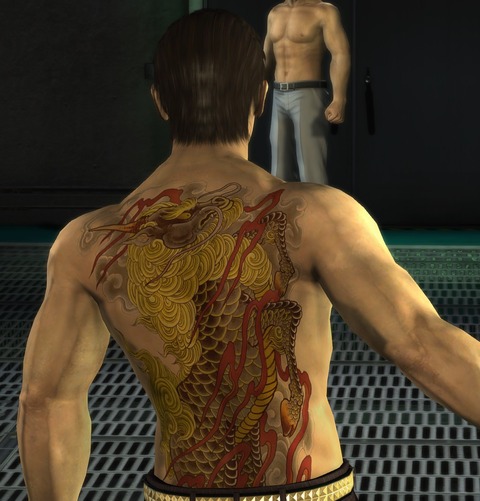
Yoshitaka Mine
Tattoo Design Features
- A traditional irezumi depicting the legendary divine beast Qilin
- A large-scale full-back irezumi tattoo
- Tattoo artist: Unknown
Symbolism and Meaning of the Qilin
It is considered one of the most sacred mythical beasts in East Asian tradition, often mentioned alongside revered creatures such as the dragon, phoenix, and tortoise.
According to legend, the Qilin appears only during times of great harmony or when a wise and virtuous leader emerges.
It is typically portrayed as a gentle and noble being that avoids unnecessary conflict, while also embodying extraordinary dignity, authority, and spiritual significance.
Meaning Within the Like a Dragon Series
The Qilin's symbolism of nobility and exceptional status mirrors Mine's extraordinary talents and rapid ascent within the organization.
Although Mine often displays a cold and ruthless side, he is also driven by profound loyalty and deep loneliness, making the mystical and enigmatic nature of the Qilin a fitting reflection of his character.
In Yakuza 3, Mine is portrayed as one of the few individuals whose presence and stature can rival Kazuma Kiryu's Dragon, further reinforcing the significance of his legendary tattoo motif.
Major Appearances
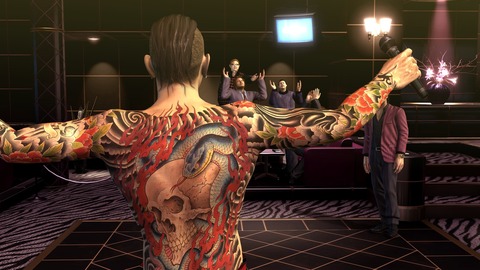
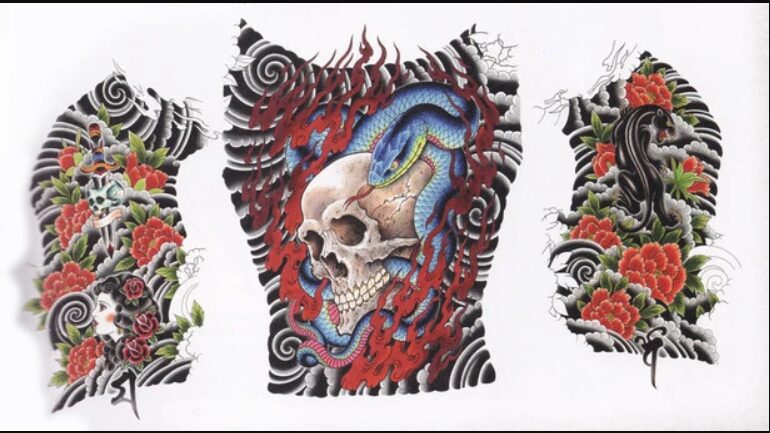
Daisaku Minami's Irezumi: Snake and Skull
Daisaku Minami
Tattoo Design Features
- A traditional irezumi featuring a snake and a skull
- A large-scale full-back irezumi tattoo
- Tattoo artist: Unknown
Symbolism and Meaning of the Snake and Skull
Because they shed their skin repeatedly, they are often viewed as symbols of renewal, resilience, and vitality. At the same time, venomous snakes are frequently linked to fear, death, and hidden threats.
The skull, meanwhile, is a widely recognized symbol of mortality, impermanence, and death.
In traditional tattoo culture, the combination of a snake and a skull is often used to represent a life lived on the edge, the constant presence of danger, and an acceptance of mortality.
Meaning Within the Like a Dragon Series
His impulsive nature and tendency toward uncontrollable outbursts are reinforced by a tattoo design that evokes death, madness, and constant danger.
In Yakuza 4, Minami serves as one of the story's more unsettling figures, and his irezumi visually emphasizes the rough, unpredictable, and threatening presence he brings to the series.
Major Appearances
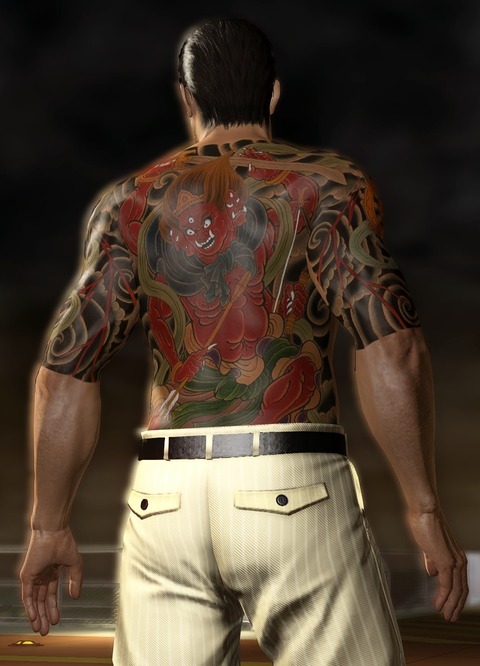
Masaru Watase's Irezumi: Asura
Masaru Watase
Tattoo Design Features
- A traditional irezumi depicting Asura, the legendary god of war
- A fierce deity-like design featuring multiple arms
- A large-scale full-back irezumi tattoo
- Tattoo artist: Unknown
Symbolism and Meaning of Asura
In Buddhism, the Asura Realm is one of the Six Realms of existence, representing endless struggle, rivalry, and obsession. As a result, Asura is often portrayed as a symbol of perpetual conflict and intense determination.
At the same time, Asura can also represent immense strength, martial prowess, and the pride of a warrior.
Because of these qualities, the motif is frequently used in irezumi to symbolize combat ability, courage, and an indomitable spirit.
Meaning Within the Like a Dragon Series
Asura, a figure that embodies battle itself, closely reflects Watase's life as a man who continually stands at the center of conflict and high-stakes confrontations.
However, despite his rough and intimidating demeanor, Watase is also deeply loyal and values honor above all else. His tattoo therefore symbolizes not only violence and strength, but also the pride and code of a true warrior.
In the later entries of the series, Watase emerges as one of the most influential figures in the yakuza world, and his imposing Asura tattoo serves as a visual representation of that commanding presence.
Major Appearances
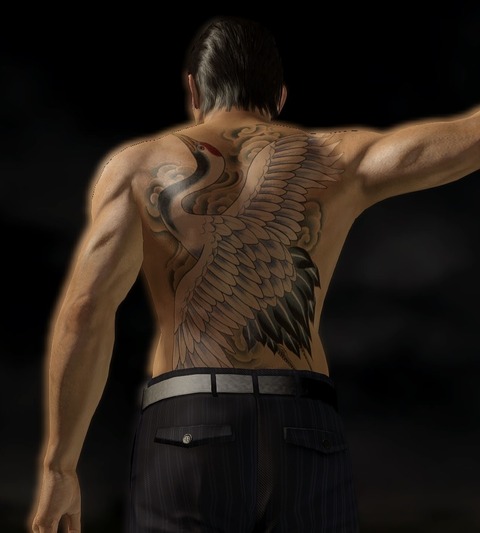
Naoki Katsuya's Irezumi: Crane
Naoki Katsuya
Tattoo Design Features
- A traditional irezumi depicting a crane with its wings fully spread
- A large-scale full-back irezumi tattoo
- An elegant design featuring a predominantly white color palette
- Tattoo artist: Unknown
Symbolism and Meaning of the Crane
Often associated with the saying "A crane lives for a thousand years," it is widely regarded as an emblem of long life, prosperity, and blessings.
Its graceful image soaring through the sky also represents dignity, pride, and spiritual refinement.
In traditional irezumi, the crane differs from more aggressive animal motifs and is often chosen to symbolize elegance, wisdom, and inner composure.
Meaning Within the Like a Dragon Series
His crane tattoo reflects a man who possesses both martial strength and remarkable self-control, embodying the balance between power and dignity.
Katsuya's respect for honor and personal loyalty, along with his preference to avoid unnecessary conflict, closely aligns with the crane's symbolism of nobility and integrity.
In Yakuza 5, he is portrayed as one of the Omi Alliance's more principled figures, and his tattoo serves as a visual representation of that distinguished character.
Major Appearances
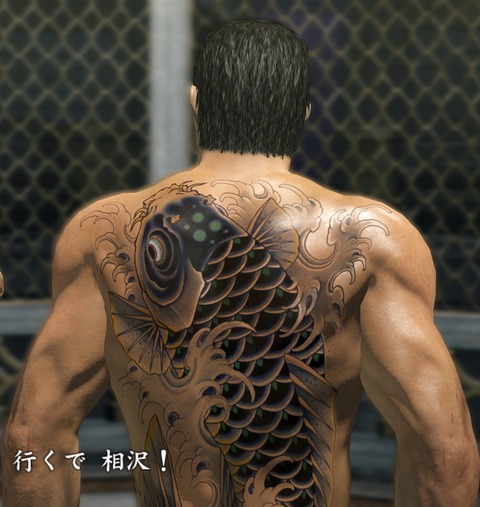
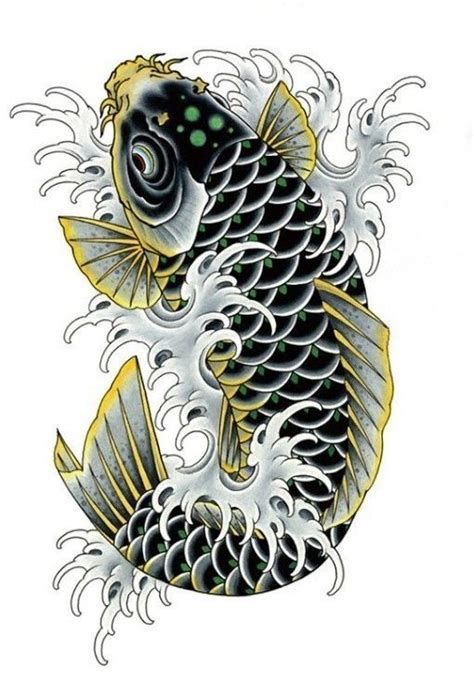
Masato Aizawa's Irezumi: Magoi (Black Carp)
Masato Aizawa
Tattoo Design Features
- A traditional Japanese tattoo depicting a giant Magoi (black carp)
- A powerful design featuring a black carp swimming upstream
- Large-scale full-back tattoo
- Tattoo artist: Unknown
Symbolism and Meaning of the Magoi
Carp themselves are widely known as symbols of success, advancement, ambition, and perseverance, derived from the Chinese legend of the Dragon Gate.
According to the legend, a carp that successfully ascends a raging waterfall transforms into a dragon, making it a popular tattoo motif representing effort, ambition, and powerful vitality.
Black carp in particular can symbolize resilience in adversity, endurance, and a sense of weighty determination.
Meaning Within the Like a Dragon Series
He is also depicted as someone with immense potential despite being incomplete, and the carp motif symbolizes a figure that has not yet fully become a dragon.
Near the end of Like a Dragon 5, he emerges as a next-generation yakuza who challenges Kazuma Kiryu, with his ambitions and determination to become a dragon reflected in the Magoi tattoo.
While sharing the same "rising through the ranks" symbolism as Akira Nishikiyama's Scarlet Carp, Aizawa's design conveys a heavier and more ferocious personality.
Major Appearances
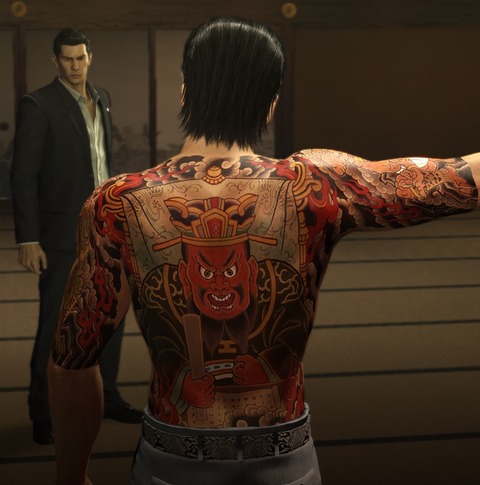
Daisaku Kuze's Irezumi: King Enma and Gozu-Mezu
Daisaku Kuze
Tattoo Design Features
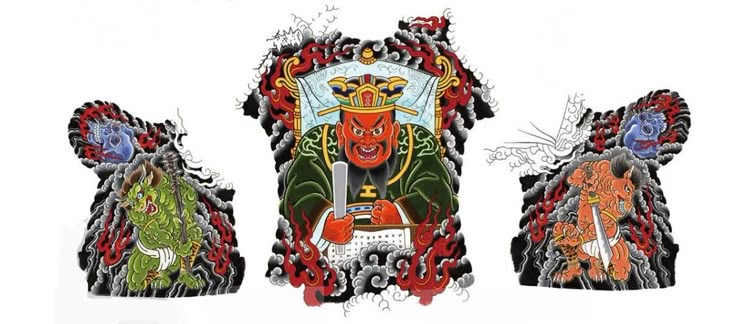
- A traditional irezumi depicting King Enma and Gozu-Mezu
- A heavy and imposing design centered on the judge of the underworld
- A large-scale full-back irezumi tattoo
- Tattoo artist: Unknown
Symbolism and Meaning of King Enma and Gozu-Mezu
He is often depicted as a symbol of strict judgment, fear, and absolute authority.
Gozu and Mezu are demonic wardens of hell who guide souls into the afterlife and serve under King Enma.
In traditional Japanese tattoo art, these figures are commonly used to represent death, the underworld, fear, and overwhelming intimidation.
Meaning Within the Like a Dragon Series
His King Enma tattoo symbolizes overwhelming authority and the presence of an underworld guardian, reflecting the relentless manner in which he pursues Kazuma Kiryu throughout the story.
The inclusion of Gozu and Mezu further emphasizes that Kuze is more than a simple brawler, portraying him as a veteran survivor who has endured countless battles within the yakuza world.
In Yakuza 0, Kuze serves as the first major obstacle standing directly in Kiryu's path, making this irezumi a fitting symbol of the fear and pressure he represents.
Major Appearances
Hiroki Awano's Irezumi: Momotaro
Hiroki Awano
Tattoo Design Features
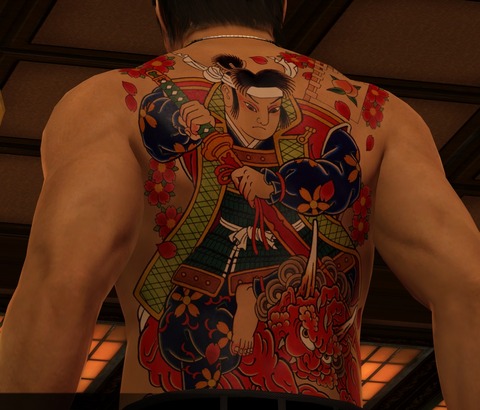
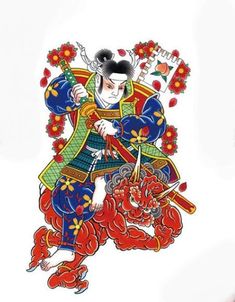
- A depiction of Momotaro setting out to defeat demons
- A large-scale full-back irezumi tattoo
- A lavish design featuring vivid and colorful artwork
- Tattoo artist: Unknown
Symbolism and Meaning of Momotaro
According to the legend, a boy born from a peach gathers a dog, monkey, and pheasant as companions before embarking on his journey.
Because of this story, Momotaro is often regarded as a symbol of courage, leadership, justice, and rising to greatness.
His role as a leader who commands loyal followers has also made him a symbol of charisma and authority.
Meaning Within the Like a Dragon Series
As a hero who leads companions into battle, Momotaro reflects Awano's position as a powerful figure surrounded by loyal subordinates while navigating major struggles for influence within the yakuza world.
Although he is flashy and pleasure-seeking by nature, Awano also possesses pride, courage, and the dignity expected of a veteran yakuza.
The colorful and highly narrative-driven Momotaro tattoo perfectly captures his commanding presence and unique personality.
In Yakuza 0, Awano stands out as one of the most memorable figures within the Dojima Family, and his distinctive irezumi remains one of the most unique tattoo motifs in the series.
Major Appearances
Keiji Shibusawa's Irezumi: Azure Dragon
Keiji Shibusawa
Tattoo Design Features
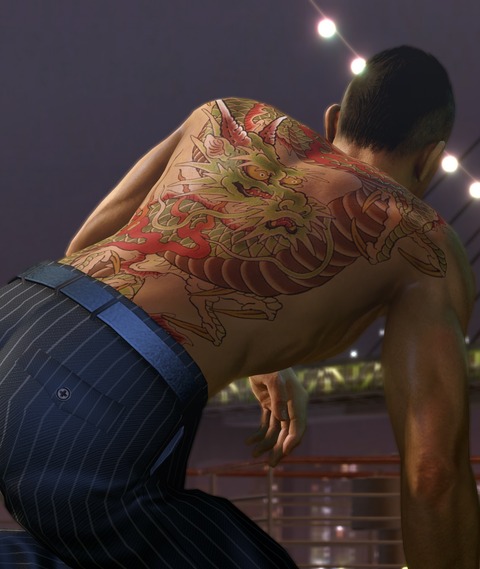
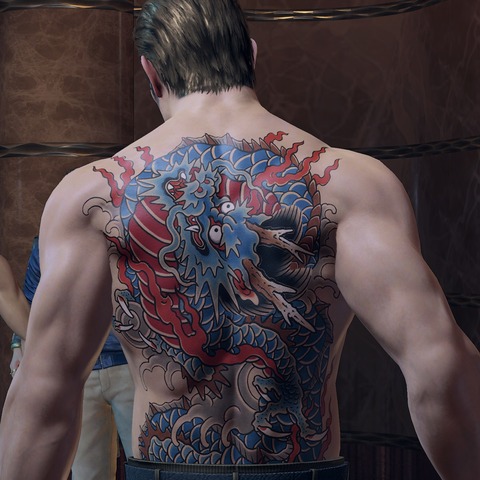
- The Azure Dragon (Seiryū), one of the Four Symbols of Chinese mythology
- A large-scale full-back irezumi tattoo
- A majestic color scheme centered on shades of blue and green
- Tattoo artist: Unknown
Symbolism and Meaning of the Azure Dragon
It symbolizes spring, growth, prosperity, and authority, and has long been regarded as one of the highest-ranking divine beasts in East Asian tradition.
Because dragons themselves represent immense power and rulership, the Azure Dragon is often viewed as a particularly noble dragon that embodies both wisdom and dignity.
Meaning Within the Like a Dragon Series
As one of the most prestigious beings among the Four Symbols, the Azure Dragon mirrors Shibusawa's desire to become a dragon himself and rise to the very top of the yakuza world.
In addition to his physical strength, Shibusawa excels at strategy and organizational leadership, making the Azure Dragon's symbolism of wisdom, authority, and prestige particularly fitting.
In the final chapters of Yakuza 0, he serves as a thematic counterpart to Kazuma Kiryu's emergence as the future "Dragon of Dojima," making his tattoo a key symbol in the game's overarching dragon motif.
Major Appearances
Tsuneo Iwami's Irezumi: Hakutaku
Tsuneo Iwami
Tattoo Design Features
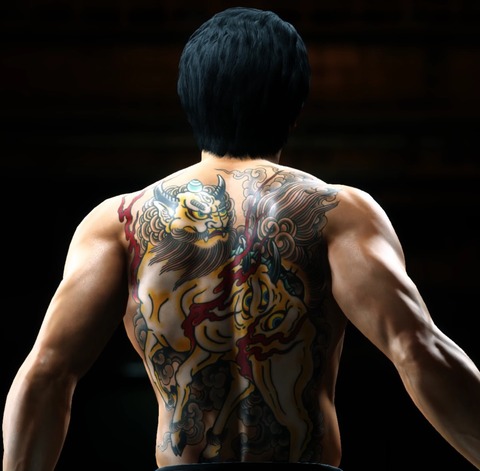
- The mythical beast Hakutaku from Chinese mythology
- A fantastical creature depicted with multiple eyes across its body
- A large-scale full-back irezumi tattoo
- Tattoo artist: Unknown
Symbolism and Meaning of Hakutaku
It is said to understand every type of demon, spirit, and supernatural phenomenon, making it a symbol of wisdom, intelligence, and foresight.
In Japan, Hakutaku became closely associated with yōkai folklore and is sometimes depicted as a guardian against evil spirits and misfortune.
At the same time, its inhuman nature and supernatural appearance often give it an aura of mystery, strangeness, and unease.
Meaning Within the Like a Dragon Series
As a mythical creature associated with exceptional knowledge and an existence beyond ordinary understanding, Hakutaku reflects Iwami's position as someone who manipulates both the legitimate world and the criminal underworld from behind the scenes.
Iwami is also characterized by his cruelty and distorted sense of superiority, and the eerie, inhuman qualities of Hakutaku reinforce the unsettling nature of his character.
In Yakuza 6: The Song of Life, he is portrayed not as a traditional yakuza warrior but as a "monster of power and privilege," making the rare Hakutaku motif a fitting symbol of his unique role within the story.
Major Appearances
Yosuke Tendo's Irezumi: Ascending Dragon
Yosuke Tendo
Tattoo Design Features
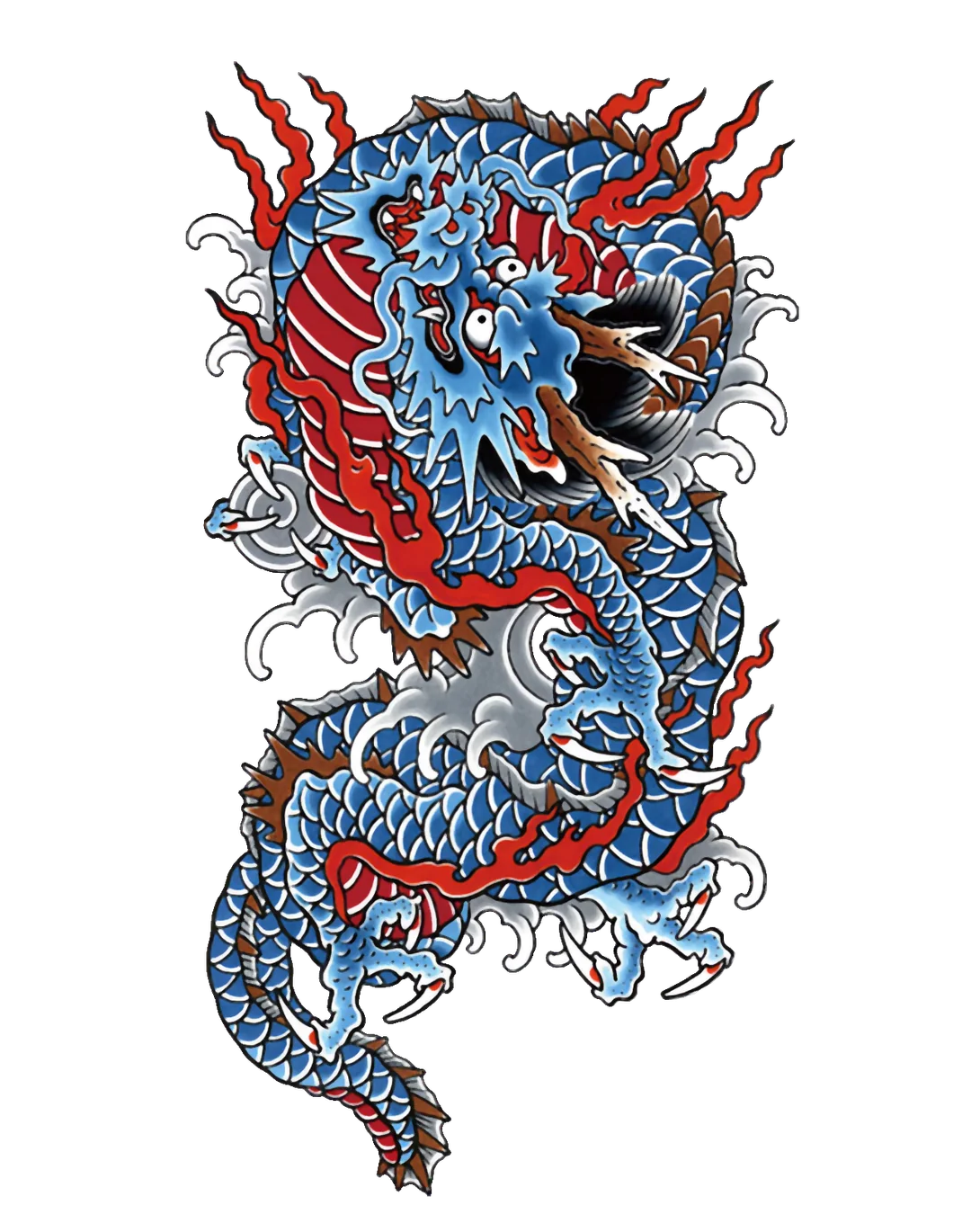
- An Ascending Dragon soaring toward the heavens
- A dynamic composition showing the dragon breaking through the clouds
- A large-scale full-back irezumi tattoo
- Tattoo artist: Unknown
Symbolism and Meaning of the Ascending Dragon
In East Asian culture, dragons are among the most revered mythical creatures, and a dragon ascending skyward specifically represents powerful growth, ambition, and the pursuit of the highest peak.
Because it symbolizes overcoming obstacles and reaching greater heights, the Ascending Dragon is also commonly associated with determination, aspiration, and an indomitable spirit.
Meaning Within the Like a Dragon Series
As a result, the Ascending Dragon perfectly reflects Tendo's relentless ambition and his drive to keep climbing higher regardless of the obstacles before him.
Tendo combines overwhelming physical power with natural charisma, and the imposing presence of the massive dragon mirrors the intimidating aura he projects throughout the story.
In Yakuza: Like a Dragon, he stands before Ichiban Kasuga and his allies as a near-monstrous force, making the colossal Ascending Dragon tattoo a fitting symbol for one of the game's ultimate adversaries.
Major Appearances
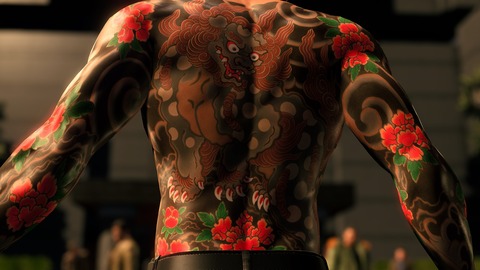
Kosei Shishido's Irezumi: Chinese Lion and Peony
Kosei Shishido
Tattoo Design Features
- A traditional irezumi depicting a Chinese Lion and Peony
- A large-scale full-back irezumi tattoo
- Luxurious colors centered around gold and red tones
- Tattoo artist: Unknown
Symbolism and Meaning of the Chinese Lion and Peony
The Chinese lion symbolizes dignity, strength, and protection as the king of beasts, while the peony represents wealth, beauty, and prosperity, often referred to as the "king of flowers."
Together, the Chinese Lion and Peony are considered a pairing of two supreme symbols, making it one of the most prestigious designs in yakuza tattoo culture.
The motif is also strongly associated with classic yakuza films and traditional ninkyo culture, making it a symbol of the aesthetic ideals of the yakuza.
Meaning Within the Like a Dragon Series
Because of this, the Chinese Lion and Peony—one of the most iconic motifs of ninkyo culture—is closely tied to Shishido's character and identity.
Shishido possesses not only overwhelming violence but also fierce ambition and pride as a yakuza seeking to rise to the top, with the lion's regal authority symbolizing that relentless drive.
In Like a Dragon Gaiden: The Man Who Erased His Name, he is depicted as the embodiment of an old-school yakuza, making the traditional Chinese Lion and Peony motif a fitting representation of his character.
Major Appearances
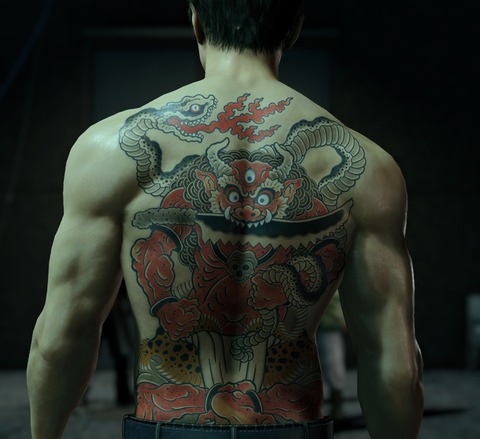
Masataka Ebina's Irezumi: Jailer of Hell
Masataka Ebina
Tattoo Design Features
- An irezumi depicting a Jailer of Hell
- A large-scale full-back irezumi tattoo
- An ominous color scheme centered around black and red
- Tattoo artist: Unknown
Symbolism and Meaning of the Jailer of Hell
Often depicted as a demonic figure, it symbolizes judgment, suffering, punishment, and the administration of the underworld.
In traditional Japanese tattoo art, the motif is used to represent death, karma, and overwhelming intimidation, and is frequently portrayed alongside scenes of hell.
Meaning Within the Like a Dragon Series
The Jailer of Hell tattoo symbolizes a figure who judges and punishes sin, reflecting Ebina's intense hatred toward the yakuza world itself.
Although he maintains a calm and controlled exterior, Ebina harbors deep resentment and obsession beneath the surface, making the eerie image of a hellish jailer a fitting representation of his dangerous nature.
In Like a Dragon: Infinite Wealth, he is portrayed not merely as a violent antagonist, but as a character who embodies the sins of the yakuza world itself, making this tattoo a powerful expression of the game's central themes.
Major Appearances
Copyright and Citations
- This article uses images and information from the Like a Dragon series (Ryu Ga Gotoku Studio / SEGA) for the purpose of commentary and analysis. All copyrights, trademark rights, image rights, and other intellectual property rights belong to their respective owners.
- If there are any issues regarding the content published on this page, rights holders are kindly requested to contact us via the Contact Form. We will review the request and take appropriate action promptly.
